
What Are the Benefits of Modular Design for Pet Feeders and Large Pet Cages? Which Products Are Suitable for Modular Design?
- Modular product design applies to smart parrot feeders, smart bird feeders, smart cat feeders, smart dog feeders, smart reptile feeders, hamster cages, parrot cages, reptile enclosures, lizard tanks, rabbit cages and more. Modular construction can be engineered for plastic components across a wide range of pet supplies.
| List of Benefits for Product Modularization | ||||
| Strong brand recognition | Lower R&D costs | Reduced procurement costs | Lower marketing expenses | Lower shipping costs |
| Reduced after‑sales costs | Lower investment for product diversification | Reduced certReduced certification feesification fees | Lower packaging costs | Smaller footprint for placement |
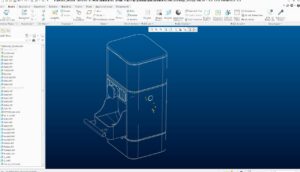
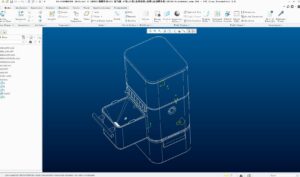
3D Rendering: Modular Design Comparison – Smart Parrot Feeder & Smart Water Dispenser
-
Strong brand recognition
- Modular design preserves consistent product and brand language, corporate logos, VI identity, defined color palettes, surface textures and component standards.
- A single product line can scale from small to large sizes and from low to high capacity, with interchangeable parts and compatibility with prevailing industry standards.
- Consistent details and operation across the product range reduce the user’s learning curve.
-
Lower R&D costs
- First, interchangeable parts cut expenses on design, verification, simulation, mold investment and physical testing.
- Second, new product lead time is significantly shortened, with fewer fixtures, less material qualification work and lower drawing management overhead. This reduces product pricing and strengthens market competitiveness.
-
Reduced procurement costs
- Interchangeable parts under modular design simplify production and inventory planning. Larger batch runs can be manufactured at once, driving down component costs and easing assembly difficulty.Fewer raw material types also reduce inspection expenses. All these factors help lower unit product prices and bring down overall sourcing costs.
-
Lower marketing expenses
- Thanks to product consistency, assets including product copy, whitepapers, specification sheets, photos, renderings and short‑video materials can be reused across the line.
- Trade shows represent substantial marketing expenditure, covering booth rental, exhibit samples, air freight, catalogs and sales presentations. With one universal base paired with quickly swappable housing modules, you can showcase 6–8 “new distinct products” at a single booth while only transporting one set of core assemblies. This reduces both the weight and volume of exhibit shipments.
- For sales training: once the sales team masters one solution, they can present the full family of derivative products, cutting training costs.
-
Lower shipping costs
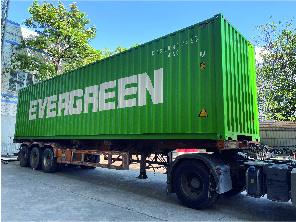
- Flat‑pack design separates the cage into modular components including cage panels, side plates, bases and supports, eliminating the empty extra space of fully assembled units. A built‑up pet cage is bulky and hollow; once disassembled, the panels can be stacked tightly together.
- For example: an assembled pet cage ships in an outer carton of 80×60×120 cm. After modular breakdown, the same set of parts fits into an 80×60×35 cm carton, cutting the volume down to roughly one‑third of the original.
- Standardized carton sizes for shared modules reduce irregular packaging.
If each finished model has a unique shape, carton dimensions vary widely, making efficient stacking inside containers and pallets difficult. - With modularization, only a small selection of standard cartons is required: boxes for electronic control modules, side panels, trays and accessory kits. Standard cartons stack more compactly and cut wasted void space.
-
Reduced after‑sales costs
- Large pet cages and pet enclosures are particularly vulnerable to costly returns. When fully assembled units are sent back by overseas customers or FBA, shipping, customs clearance and import duties often far exceed the value of the product itself.
- Once the fault is identified, there is no need to return the complete unit. Only the defective component is recalled, and replacements are shipped separately — freight costs are substantially lower than returning the whole cage.
- On‑site self‑service replacement for end customers: simple plug‑and‑play modules allow users to swap faulty parts on their own, eliminating return shipping entirely.
- Spare‑parts inventory is streamlined around a small set of standardized modules. Derivative models share common components, so there is no requirement to stock complete spare units for every variant.
- Warehouses can carry smaller quantities of frequently replaced, high‑wear modules. This reduces total inventory value, warehousing rent, and write‑off losses from slow‑moving or obsolete stock. It also avoids material waste from scrapping entire assembled units, which is especially critical given the high tooling cost for large injection‑molded housings.
- Repair labor and skill barriers are also reduced. Standardized fault diagnosis, repair SOPs, troubleshooting manuals, guides and tutorial videos can be reused across the entire product family, cutting documentation and training expenses.
-
Lower investment for product diversification
- Functional diversity: Swap electronic control modules to offer base, Bluetooth, Wi‑Fi, camera, constant‑temperature and automatic feeding variants.
- Size diversity: Large, medium and small cage bodies share the same electronics; only structural modules are exchanged.
- Aesthetic diversity: Multiple colorways, front-opening doors, side-opening doors, acrylic or mesh panel options.
- Regional market diversity: Japan versions (PSE/TELEC) and EU/US versions (CE/FCC) are differentiated by power supplies and RF modules.
- Customization diversity for clients: For ODM projects, customers only need to modify the outer housing, nameplate and optional sensors to launch exclusive product models rapidly.
-
Reduced certification fees
- Core modules hold independent certifications, and the finished product can reference these module certificates:
Power modules are separately certified to PSE / CE / FCC LVD; Bluetooth and Wi‑Fi communication modules carry standalone TELEC, FCC ID and CE RED approvals. Provided the power supply and RF modules remain unchanged in the final assembly, regulations in many regions allow the finished product submission to reference the existing module certificates. Full retesting and recertification of the complete unit as a brand‑new sample are not required. - Key point: Radio frequency (RF) certification carries the highest cost and longest lead time. Reusing RF modules through modular design delivers the greatest benefits.
- Derivative models only require delta testing.
If only mechanical components such as the outer housing, cage dimensions, color schemes, acrylic or mesh panels, and water tanks are modified, while the power circuit, RF module, battery and main control circuit remain unchanged, full EMC, safety and radio retesting is not mandatory. Mechanical and housing revisions generally only require a limited set of verifications, including temperature rise, enclosure protection and electric shock prevention. Fewer test items mean lower testing and sample costs, alongside shorter lead times.
-
Lower packaging costs
Eliminate extra-large custom printed boxes in favor of standard cartons
Fully assembled units feature bulky outlines and large hollow spaces, which demand oversized non-standard custom boxes with high minimum order quantities and steep unit prices. When split into modular parts, side panels, bases and electronic control modules are packed separately. Off-the-shelf corrugated cartons of standard sizes can be adopted, bringing lower purchase prices, lower MOQs and a wider pool of suppliers.
Substantial reduction in cushioning materials
Complete assembled units shift inside packages and are prone to crush damage, requiring generous amounts of EPE foam, thermoformed inserts and custom foam fixtures. After disassembly, stacked panels support and protect one another. Electronic modules are safeguarded in individual small boxes. Large custom one-piece thermoformed inserts are no longer necessary, cutting tooling charges for foam and thermoforming as well as material consumption.
One packaging system compatible with multiple variants
Shared modules enable shared packaging structures: electronic control kits and motor accessory sets use identical small printed boxes or neutral bags. Only outer cartons are resized for different housings. There is no need for full redesign, sampling and thermoform tooling for every single SKU. For ODM customers refreshing aesthetics, often only stickers and printed artwork on color boxes are updated while the internal insert layout stays unchanged.
Amortized costs for printed collateral
For instruction manuals, warning cards and compliance labels: all electrical and electronic content uses a unified master version. Short supplementary insert sheets cover model-specific differences instead of full reprints. Outer carton mark templates are reusable; only model and version fields are revised.
Higher packing efficiency for indirect packaging savings
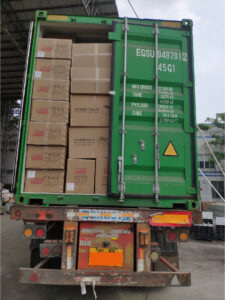
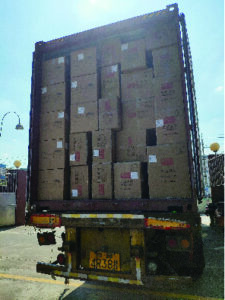
Standard cartons stack and palletize neatly to cut packing labor. Tape and stretch film consumption becomes more predictable and controlled.
-
Smaller footprint for placement
- Flat, disassembled storage when not in use
Fully assembled cages occupy a fixed footprint, with hollow frames taking up considerable space. Side panels, base panels and top covers can be detached and stacked, while electronic control modules are stored separately in small boxes. During off‑seasons, moves or periods of non‑use, the stacked components can be placed against walls, greatly reducing floor space — ideal for small apartments, balconies and storage rooms. - Stackable layered configurations for flexible vertical space utilization
Selected modules can be stacked vertically instead of spreading out horizontally. Users may choose single‑tier or stacked setups according to available room space, without permanently occupying large floor areas. - Space‑saving for relocation or temporary transport
Once disassembled, parts fit easily into storage cabinets and vehicle trunks, eliminating the hassle of moving and placing bulky complete cages. - Differentiation against competitors
Conventional one‑piece pet cages retain the same fixed footprint whether in use or stored. Modular design separates the “in‑use state” from the “storage state”; the footprint in storage mode can be reduced to only 1/3 ~ 1/4 of its operational size.