White double-tier steel parrot cage for budgies, lovebirds and cockatiels, two-level aviary with wooden perches, pull-out tray and wheels
Part 1: Industrial & Aesthetic Design of the Plastic Base Frame for Parrot Cages
- Market analysis: Most parrot cages on the market are built purely with cold wire mesh, lacking aesthetic appeal. They feature monotonous color schemes, blend poorly with home interiors and clash with existing decor. Many brands only make minor tweaks to off‑the‑shelf designs, making true differentiation difficult. The majority of these products fail to follow golden‑ratio aesthetics. For home use, light color tones such as white or warm neutrals cater to most customers. Fine matte texture is adopted for exterior surfaces. The silk‑screened logo is positioned at the upper left or upper right of the front panel.
- Dimensions follow the 1:1.618 golden ratio. Double‑tier or triple‑tier configurations are available for keeping multiple parrots. Transition radii are also designed based on the golden ratio. Internal space layout accommodates parrots’ natural movement habits with ample room for activity.
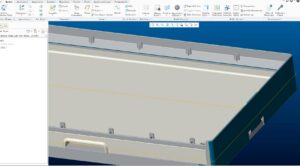
- User‑centered cleanability is prioritized. Sloped surfaces are implemented in areas prone to accumulating dust and bird droppings, guiding waste into the pull‑out tray for effortless cleaning.
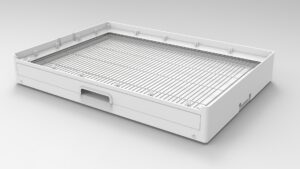
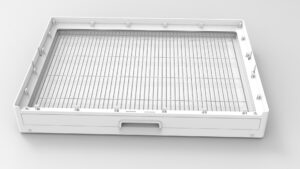
- The pull tray features fully rounded edges to prevent hand scratches, and its handle is engineered with ergonomics in mind.
Part 2: Material Selection for the Plastic Frame
- For the outer housing, high-impact plastics such as ABS, PC and PA are selected. Food-grade material is used on all surfaces accessible to parrots. The pull-out tray can be made of PP, which features a smooth surface and excellent cleanability.
- The mesh for the base frame is available in SUS304 stainless steel, or coated iron wire with exterior spraying treatment.
Part 3: Selection of Plastic Molding Processes
- For mass production of plastic base shells, injection molding machines are the preferred option. For prototypes, 3D printing or silicone mold injection molding is available. One silicone mold can produce roughly 20 samples, delivering a better surface finish than 3D printing and closely resembling production injection‑molded parts.
- The stainless steel mesh at the base requires argon‑arc welding. All wire joints shall be rounded to prevent sharp edges that may cut users. Welding jigs and fixtures are used to guarantee consistent dimensions across every mesh piece.
Part 4: Structural Design of Plastic Base Shell Frame
- Draft angles are required for the plastic base shell frame. Draft is closely related to texture: coarser textures demand larger draft angles, typically 3°, while fine textures generally require 1.5°.
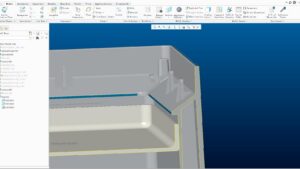
- The drainage slope is designed to be no less than 30°. Drain channels cover the gap between the pull‑out tray and wire mesh to ensure all waste slides into the tray.
- Ribs are arranged at equal intervals to distribute load and strengthen the plastic frame. Rib density is increased locally in heavily loaded zones.
- Interconnecting components adopt snap‑fit connections for tool‑free disassembly by hand, making disassembly and cleaning easier.