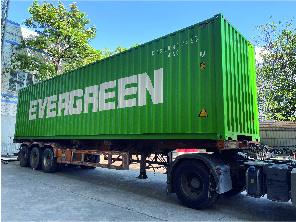
We ensure the products arrive at their destination safely through 7 key measures.
| Safe & Fast Delivery | |
| 1 | Advance Booking Plan |
| 2 | Documents Prepared in Advance |
| 3 | Proper Packaging & Container Loading |
| 4 | Ocean Freight Risks & Insurance |
| 5 | Compliance & Inspection |
| 6 | Timing & Schedule Confirmation |
| 7 | Destination Customs Clearance & Charges |
- Overseas Shipping Process for Smart Feeders & Parrot Cages
- Advance Booking Plan
- Select the Container Type Based on Products & Quantity
- Track Shipping Space & Document Cut-off Time
- Confirm the Port of Loading Time
- Documents Prepared in Advance
- Prepare the Commercial Invoice.
- Prepare the Packing List with accurate descriptions of product name, material, quantity, CBM, gross weight and net weight.
- Prepare the Bill of Lading (B/L), confirming the Consignee and Notify Party details.
- Prepare the Certificate of Origin: CO / Form A / Form E, as required.
- Provide product certifications: CE / FCC / RoHS / PSE / TELEC.
- Proper Packaging & Container Loading
- Challenge: Plastic housings are prone to scratches and deformation under pressure.
• Individually wrapped in PE and foam/EPE bags, with EVA corner protectors added to sharp edges.
• Packed in 5-ply / 7-ply corrugated cartons, with shipping marks showing Order No., PO No., Carton No., G.W./N.W. and destination port.
• Modular disassembled packaging reduces per-unit volume while preventing crushing from stacking. - Container Loading Risks
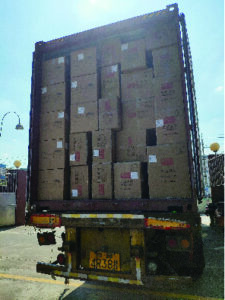
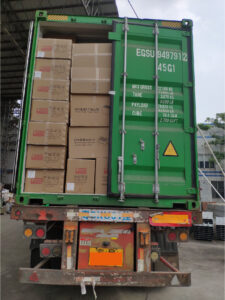
• Place heavy goods at the bottom and light plastic housings on top.
• Secure and lash the cargo with straps to prevent collapse and abrasion caused by rough seas.
• Keep photo documentation — before loading, during loading and after sealing — essential evidence for claims. - Moisture Protection
- Plastic parts and electronic control boards are highly sensitive to condensation. Place desiccants inside the container; for long voyages (25+ days), moisture-proof bags are recommended to prevent damage from « container sweat. »
- Ocean Freight Risks & Insurance
- Risk Coverage
Risks include sea condensation, rain damage, collision, piracy, rolled containers, schedule delays and destination-port detention. Purchase Marine Cargo All Risks insurance — coverage is a must for high-value orders. - Types of Bill of Lading
• Original B/L: Cargo is released only when the customer presents the original document — ideal for retaining control of goods with new customers.
• Telex Release: Cargo is released against a telex release letter — faster release for regular and repeat customers.
- Compliance & Inspection
- Wooden packaging: If wooden pallets are used, an IPPC fumigation mark is mandatory. This is strictly enforced in Europe, the US and Japan — shipments without the mark will be rejected and returned.
HS Code: Confirm the HS code in advance. Plastic housings and cages with electronic control boards fall under different HS codes.
Powered products and batteries must be declared separately.
- Timing & Schedule Confirmation
- Transit Times
• Southeast Asia: 3–7 days
• Japan: 3–6 days
• US West Coast: 12–18 days; US East Coast: 22–30 days
• European basic ports: 25–35 days Advance notice: Inform customers beforehand that sea freight may involve irregularities such as schedule delays, port congestion and rolled containers.
- Destination Customs Clearance & Charges
- Confirm trade terms with the customer in advance: DDP (duty paid) or FOB / CIF
• FOB (Free On Board): We only deliver the goods to the port of loading. Destination customs clearance, duties and final delivery are all borne by the buyer.
• CIF (Cost, Insurance and Freight): We cover the ocean freight and insurance to the destination port.
• DDP (Delivered Duty Paid): We handle customs clearance and pay all duties, delivering to the agreed destination.