Sliding Bird Cage Tray

Sliding Bird Cage Tray

Custom ABS Plastic Bird Cage Tray

  • 1. One-Piece Injection-Molded Pull-Out Tray
  • The bird cage features an integrated pull-out tray that retracts neatly into the frame.
  • 2. Modular Wire Fence for an Elevated Cage
  • The tray frame can be fitted with a metal wire fence. Integrated structures on the tray lock securely into the fence, forming an elevated bird cage.
  • 3. Simple Design with Easy-Clean Handle
  • The pull-out tray assembly is designed for simplicity, with a built-in handle on the waste tray for easy pulling and cleaning.
  • 4. White Finish — Matte Outside, Smooth Inside
  • The overall design is white with a matte textured exterior, while the tray interior has a smooth, washable surface that can be rinsed with water.
  • 5. Four-Wheel Structure for Easy Mobility
  • The bottom of the tray frame is designed to accommodate four caster wheels, making the assembled bird cage easy to move.

OEM & ODM Bird Cage Plastic Shell

DFM analysis
CROE/UG
maximum part size
60 in
large part warpage control
2‰

Product Specifications Sheet

Key Parameter Information for Custom Pet Product Trays

Product Specifications Options & Capabilities Notes
Material ABS plastic Materials for large-size trays can be customized to suit your needs.
Thickness 2.8 mm Product thickness can be designed to match the tray dimensions.
Dimensions 460 × 460 × 125 mm (18.1 × 18.1 × 4.9 in) Tray dimensions can be made up to 1200 mm.
Color White (custom colors available on request) Trays are available in a rich variety of colors.
Weight 1600g Tray weight depends on the selected material and thickness.
Surface Finish Fine Matte Texture Different texture finishes are available depending on the model.
Model / SKU PETJPG-TRAY-460 Internal Part Number
How to Choose Materials for Large Plastic Trays

How to Choose Materials for Large Plastic Trays

1、For large plastic trays, materials with good flowability are preferred, as they are easier to mold and allow better control over dimensions.
2、If a certain level of strength is required and good impact resistance is needed, ABS is a suitable choice. For trays that do not bear heavy loads, PP can also be used.
3、The tray frame needs to be made of a material with good impact resistance, as the upper section must connect to a metal frame and is subject to significant load.

Surface Treatment Considerations for Large Plastic Pet Trays

Surface Treatment Considerations for Large Plastic Pet Trays

1. Draft Angle and Surface Texture
Plastic trays require a draft angle, which is closely related to the surface texture. A coarser, larger texture calls for a larger draft angle.
2. Draft Angle and Product Height
The draft angle also depends on product height. The taller the product, the smaller the draft angle can be — this helps avoid significant dimensional differences between the top and bottom of the part.
3. Logo Printing
Logos can be printed on the plastic surface. Choose materials with good adhesion that can pass the cross-cut (cross-hatch) test.
4. Laser Marking
Product information can be laser-marked onto the surface. The laser removes the top layer to create the marking — a clean, attractive finish in which the information will not peel or wear off.

Mold Structure Considerations for Large Pull-Out Trays

Mold Structure Considerations for Large Pull-Out Trays

1. Gate Design
Large plastic trays require large molds, which generally use a large gate (sprue gate) for injection. This allows the mold cavity to be filled quickly during molding.
2. Keep the Design Simple
Avoid overly complex product designs. A complex structure leads to a more complex mold, a longer molding cycle, and higher costs.
3. Drawer Guide Rails
The drawer guide rails run the full length to achieve quiet operation. This requires either a large side core pull in the mold structure, or a design in which the part is made as a separate module and assembled afterward.

Diverse Applications of Custom Large Plastic Trays

See how pet product integrators, distributors and managers put our solutions to work — from assembly to real-world use. By combining the base shell with different accessories, a single platform supports a wide variety of applications.

Ideal for use in parrot aviaries and breeding grounds.

Insert four aluminum alloy posts into the four corners of the tray, then slide the mesh panels on all four sides into the posts. Fasten the top mesh to the side panels, and place a bottom mesh inside the tray — and the parrot house is assembled. The one-piece molded base and frame allow for quick, easy setup by the user.

Suitable for guinea pig housing and breeding areas.

The biggest difference between raising guinea pigs and parrots lies in the bottom mesh. Guinea pigs need a bottom mesh with wide grid openings so they can stand comfortably without their feet getting caught. Simply by replacing the bottom mesh, you can set up a guinea pig house.

Designed for lizards and other reptiles — easy to clean and maintain in reptile enclosures.

For reptiles, no bottom mesh is needed — simply surround the base with mesh panels. The mesh should have a finer density than that used for other animals. Reptiles need habitat items placed directly on the base tray, such as stones, branches and shelters. In this way, a reptile house can be set up quickly.

Molds are a critical element to ensure consistent tray quality.

Molds are a critical element to ensure consistent tray quality.

The steel material and machining process of the mold guarantee high-quality trays. This tray mold is made of 718H mold steel. It delivers a production life of up to 300,000 shots. The material features excellent comprehensive performance, resisting wear and chipping during long-term mass production. It maintains consistent dimensions and surface finish for every batch of trays, ideal for large-volume custom orders.

A US customer purchased the tray assemblies and assembled them into birdcages for sun conures.

A US customer purchased the tray assemblies and assembled them into birdcages for sun conures.

The customer mentioned the tray is much larger than expected. The assembled birdcage provides generous space, and sun conures enjoy moving around freely inside.

What Makes a Reliable Pet Products Supplier?

What Makes a Reliable Pet Products Supplier?

A reliable pet products supplier should be able to provide one-stop services, including mold R&D, software analysis, mold flow simulation, motion simulation and custom printing — supported by advanced equipment and skilled workers for production.

In addition, a supplier with a large selection of ready-made molds for customers to choose from and customize has a distinct advantage: it helps save costs and shorten the production cycle.

Surface Texture Finishes for Large Plastic Parts

n the injection molding and mold-making industry, texture patterns are etched onto the mold surface. Using a physical reference sample or an actual sample as a guide, the mold texture is processed so that the corresponding texture pattern appears on the plastic surface after molding.

Textured ABS Surface Detail of the Bird Cage Tray

Textured ABS Surface Detail of the Bird Cage Tray

More Texture Options for White Trays

More Texture Options for White Trays

Custom Bird Cage Trays & Large Plastic Housings — Wholesale, OEM & ODM

In-house tooling and ABS injection molding for large parts — one sample tray through to 1,000-set production runs, with texture and marking finished before it ships.

B2B Commercial Supply & Packaging

Samples & Approval

Stock trays ship as samples in 5-7 working days, and a custom color, texture or wall thickness comes off the T1 shot.

  • Sample trays are production parts, not prototypes - the fit you test is the fit that runs
  • Drawings are signed off before the tool is cut, and the T1 part is measured against them
Production Lead Time

T1 samples: 25-30 working days after drawing sign-off.

Bulk after approval: 10-15 working days for the first run, 18-22 days for container-scale orders.

Repeat orders against the same tool: 12-15 working days, with no tooling time added.

Standard Packaging

Complete Standard Package Includes:

  • 1pc x Molded ABS tray, sleeved in a PE bag
  • 1pc x Export carton with footprint, barcode and carton-marking panel printed to your artwork
  • Nested multi-packs for palletised LCL loads, or floor-loaded 40HQ for full containers
  • FOB Guangzhou or Shenzhen as standard; CIF and DDP quoted against your port

Custom color matching, mold-etched texture and logo marking are quoted on the same sheet as the trays, so tooling, packaging and freight come back as one landed-cost figure per set.

Certification & Compliance

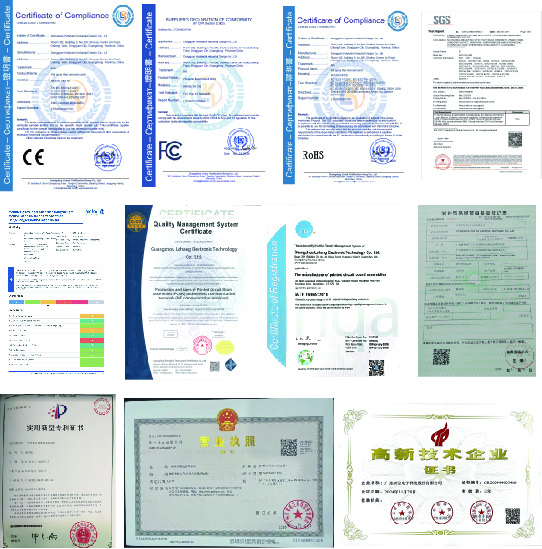
Material and test documents are issued per batch against the part number, so a retail or distributor compliance file is complete before the container leaves - the declarations below are the ones we supply as standard.

REACH SVHC RoHS ISO-Certified Production PAHs

Packaging for Pet Sliding Trays — What Customers Care About

1. Kraft Paper Packaging
We use 5–7 ply kraft paper packaging, with each set individually packed for the customer's convenience.

2. Bubble Wrap & Corner Protection
The entire product is wrapped in bubble wrap, with EPS foam or EVA corner protectors on all four corners to protect the most stress-prone areas.

3. Individual Part Separation
Each part is separated with cardboard sheets to prevent friction and surface scratches during transit.

Customize Pet Sliding Tray from Sample to Scale

Step 1 Tray Drawing, Rail Fit and Quantity - send the footprint, the rail or drawer the tray slides into, the color reference and the order quantity; we come back with a DFM note and a price band. Send Requirements
Step 2 Tool Making and T1 Samples - tool built to your draft and texture, T1 shots in the agreed ABS grade, a dimensional report across the 460 mm face and a texture plaque for approval.
Step 3 Frame Fit Test and Sample Sign-Off - trays are run through the cage frame, the pull-out handle and the caster sockets are checked, and the sample is signed off against the drawing.
Step 4 Mass Production, Packing and Shipment - production runs against the signed sample, nested cartons with your carton mark, and containers loaded FOB Guangzhou or Shenzhen.

FREQUENTLY ASKED QUESTIONS (B2B BUYERS)

What is the maximum part size and weight you can manufacture?

Size is the limit that matters here rather than weight: this tray runs 460 × 460 × 125 mm (18.1 × 18.1 × 4.9 in) at 1,600 g in ABS, and the machine ceiling is about 1,200 mm across the part. Send the drawing with the wall thickness and we confirm the shot weight and which press it goes on before quoting, so the number you get back is for the machine that will actually run it.

Can injection molding produce large parts?

Yes. This tray is one shot in a single-cavity tool. A part this size needs a sprue gate at the centre so the cavity fills before the melt freezes, a uniform wall so the floor does not sink between the ribs, and a cycle long enough for the part to hold its shape after ejection. We hold 2.8 mm through the 125 mm draw, keep the warpage budget at 0.2% of the diagonal, and measure flatness on the tray floor in the first-article report rather than only the outside profile.

Do you have in-house tooling?

Yes. Tool design, programming, build and the T1 trials all run in-house, so a draft or gate change between T1 and T2 is a shop-floor decision instead of a purchase order to a third party. Your drawing, the tool and the trial report stay in one file, which is why the T1 part you approve is the part that runs.

Do you provide DFM and Moldflow analysis?

Both, and both before the tool is cut. The DFM note covers draft against the chosen texture, wall and rib layout, gate position and the core pull the handle opening needs. Moldflow is run on the fill and the packing stage, because on a part this large that is where weld lines and the sink mark over the ribs show up - better predicted on screen than found on the first shot.

Who owns the mold after I pay for it?

You do. Tooling is invoiced once and the tool, its drawings and the T1 dimensional report belong to you from that point. It stays in our rack for repeat orders with no storage charge, and if you move production we crate it and hand it over with the maintenance record.

What's your MOQ and how is the unit price calculated?

500 sets is the standard run, and 1,000 sets is where the tooling stops carrying weight in the unit price. The price is shot weight against the resin rate, plus cycle time, plus the finishing you asked for - colour matching, moulded texture, silk-screen or laser marking - plus the carton. That is why the same tray quoted from a drawing and quoted from a physical sample can come back at two different numbers.

What's the mold life and lead time?

The tool is built in 718H or an equivalent pre-hardened steel for about 300,000 shots with normal maintenance, and the wear parts - ejector pins, sprue bush - are replaceable without re-cutting the cavity. Lead time on a new tool is 25-30 working days to T1, 10-15 working days for the first production run after sign-off and 18-22 days for container-scale orders. Repeat orders skip the tooling stage entirely.

WHY CHOOSE US

Top Tier OEM/ODM 20+ Years | Custom Large Smart Pet Products

1 Million+
Annual Capacity
30+
R&D Team
ODM/OEM
20+ Years
Certification
CE/FCC/RoHS/FDA/IEC62368

International Certifications

We are a high-tech enterprise integrating R&D, production and sales. We have a strong R&D team specializing in industrial design, electronic design and structural design. Certified with ISO9001 and BSCI management systems, we serve more than 200 customers worldwide.

International Certifications
FCC
CE
CE-EMC
REACH
RoHS
UN38.3
IEC62368
FDA
FCM
GPSD
UL/ETL IEC62368-1
FCM EU 10/2011
UL94

Contact Us

We'd love to hear from you!

Back to All Services